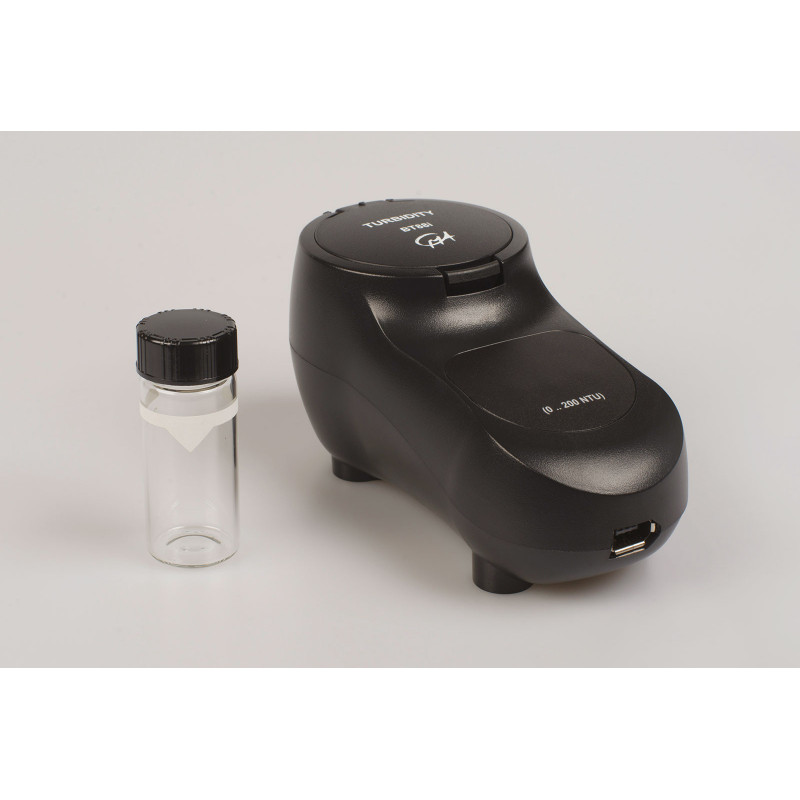

Turbidity is a measure of water clarity; how much the material suspended in water causes light passing through the water to be scattered. The higher the intensity of scattered light, the higher the turbidity. Suspended materials in the water are for example soil particles (clay, silt, and sand), micro- organisms (phytoplankton, zooplankton) and other substances.
Technical specifications:
Measurement range: 0 .. 200 NTU
Resolution: 0.2 NTU
Accuracy: ±2 NTU for measurements below 25 NTU, ±5% for measurements above 25 NTU
LED wavelength: 890 nm
Maximum sample frequency: 100 kHz (CoachLab II+, WiLab) / 1 MHz (VinciLab 2)
Warranty: 3 years
All technical specifications of the turbidity sensor are described in the product manual, see downloads.
Suggestions for biology, chemistry or geography experiments:
Measuring turbidity is a standard test for determining water quality. Compare the turbidity of water samples from various locations
Determine the precipitation rate of a water sample
Measure the formation of sediment
Turbidity is measured in Nephelometric Turbidity Units (NTU). Turbidity measured in NTU uses nephelometric methods that depend on passing specific light of a specific wavelength through the sample. The measurement is qualitative and cannot be correlated directly as micrograms per liter of suspended solids.
The Turbidity sensor can be directly connected to the analog BT inputs of the CMA interfaces.
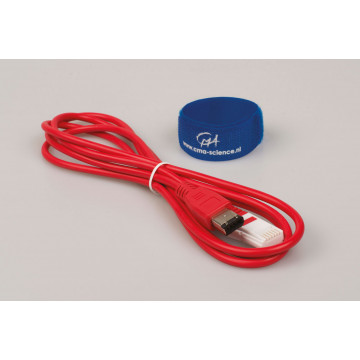
A ‘P4272-1K BT sensor cable, single’ is required to connect the sensor to the interface.
Please check whether you already have this cable in your stock.